 GECKO
GECKO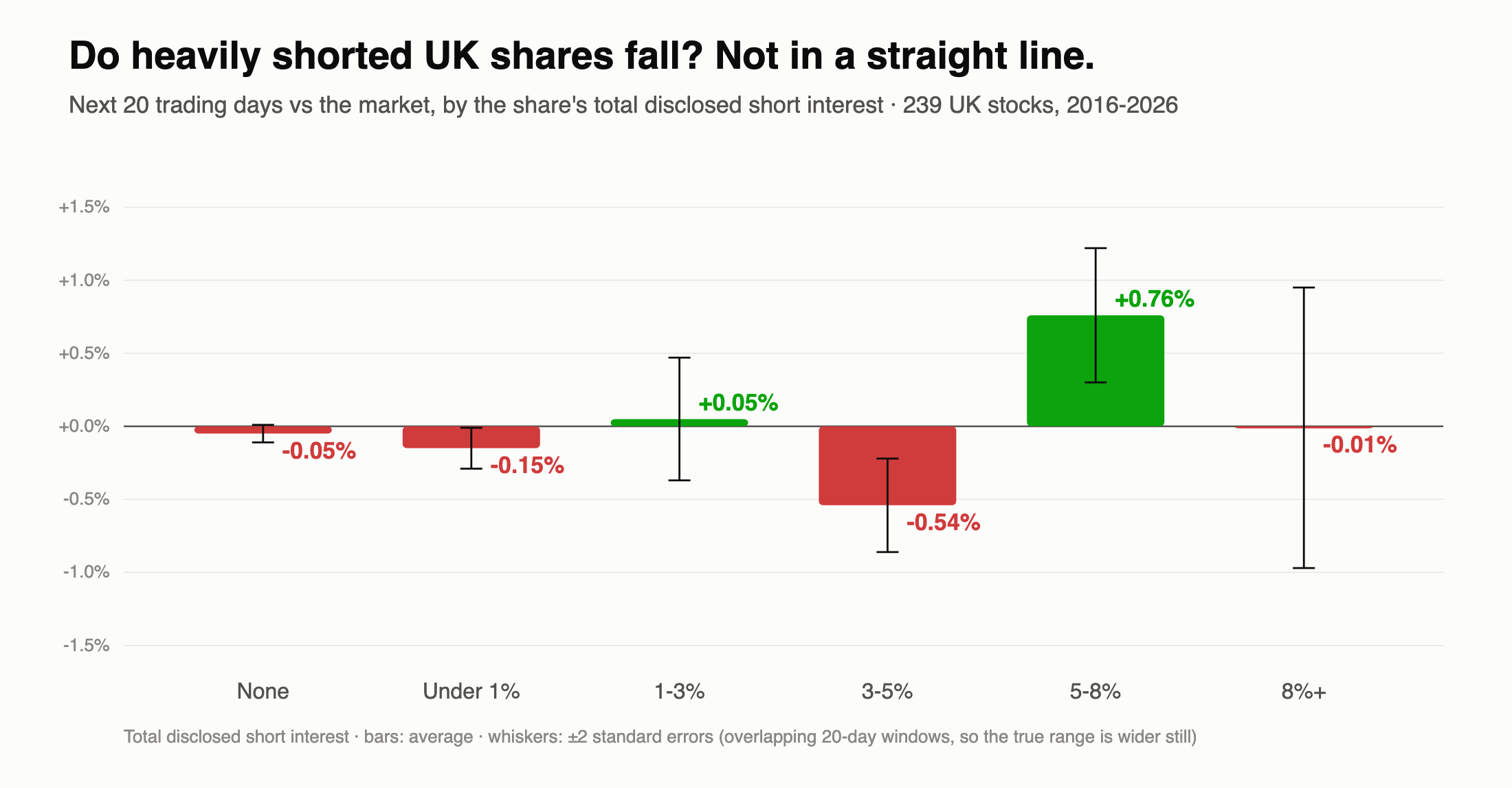
TL;DR
- The data: in the UK, any fund holding a short position of 0.5% or more of a company’s shares must disclose it, and the FCA publishes them all. Gecko loaded 55,690 disclosures in 239 of its stocks, back to 2012.
- The idea: research - mostly American - finds that heavily shorted shares go on to underperform. If that held in the UK, it would make a useful warning sign on Gecko’s buy tips.
- No pattern: more short interest did not mean worse returns. Moderately shorted shares (3-5%) lagged a little; more heavily shorted ones (5-8%) did better than the market.
- Not consistent either: heavily shorted shares did well on Gecko’s original stocks and slightly badly on the new FTSE 350 ones. A real effect would show on both.
How it was tested
For each stock, Gecko rebuilt its total disclosed short interest day by day - adding up each fund’s latest position, and only from the day after it was published, when anyone could have known it. Every five trading days it then measured how the share did over the next 20 days against the average stock, so a rising or falling market couldn’t distort the result.
| Total disclosed short interest | Samples | Next 20 days vs the market |
|---|---|---|
| None disclosed | 70,928 | -0.05% |
| Under 1% | 18,161 | -0.15% |
| 1-3% | 16,882 | +0.05% |
| 3-5% | 4,866 | -0.54% |
| 5-8% | 2,413 | +0.76% |
| 8% or more | 879 | -0.01% |
If short sellers reliably knew something, the numbers would get steadily worse down the table. Instead they bounce around zero. Changes didn’t help either: shares where funds were closing their shorts did slightly worse afterwards, not better. And because the 20-day windows overlap, the real uncertainty is wider than the table suggests - all of this is within noise.
Why it doesn’t work here
- The UK only shows part of the picture. American research uses total short interest. The UK only publishes positions of 0.5% or more per fund, so much of the shorting in a company is invisible.
- Many big shorts aren’t bets on a fall. Funds short shares to hedge convertible bonds, takeover bets or other positions; those shorts say nothing about where the price is heading.
- Disclosure takes the edge off. Once a position is public, the market knows about it too.
Verdict
Fail. Short-selling disclosures are an interesting window into what hedge funds are doing, but on UK shares they don’t predict the next few weeks’ price - not as a signal, and not as a warning sign on buy tips. It’s the opposite of what Gecko found for directors buying their own shares: a director’s purchase is a clear, personal decision about the price; a fund’s short position often isn’t.