 GECKO
GECKOThe Hypothesis
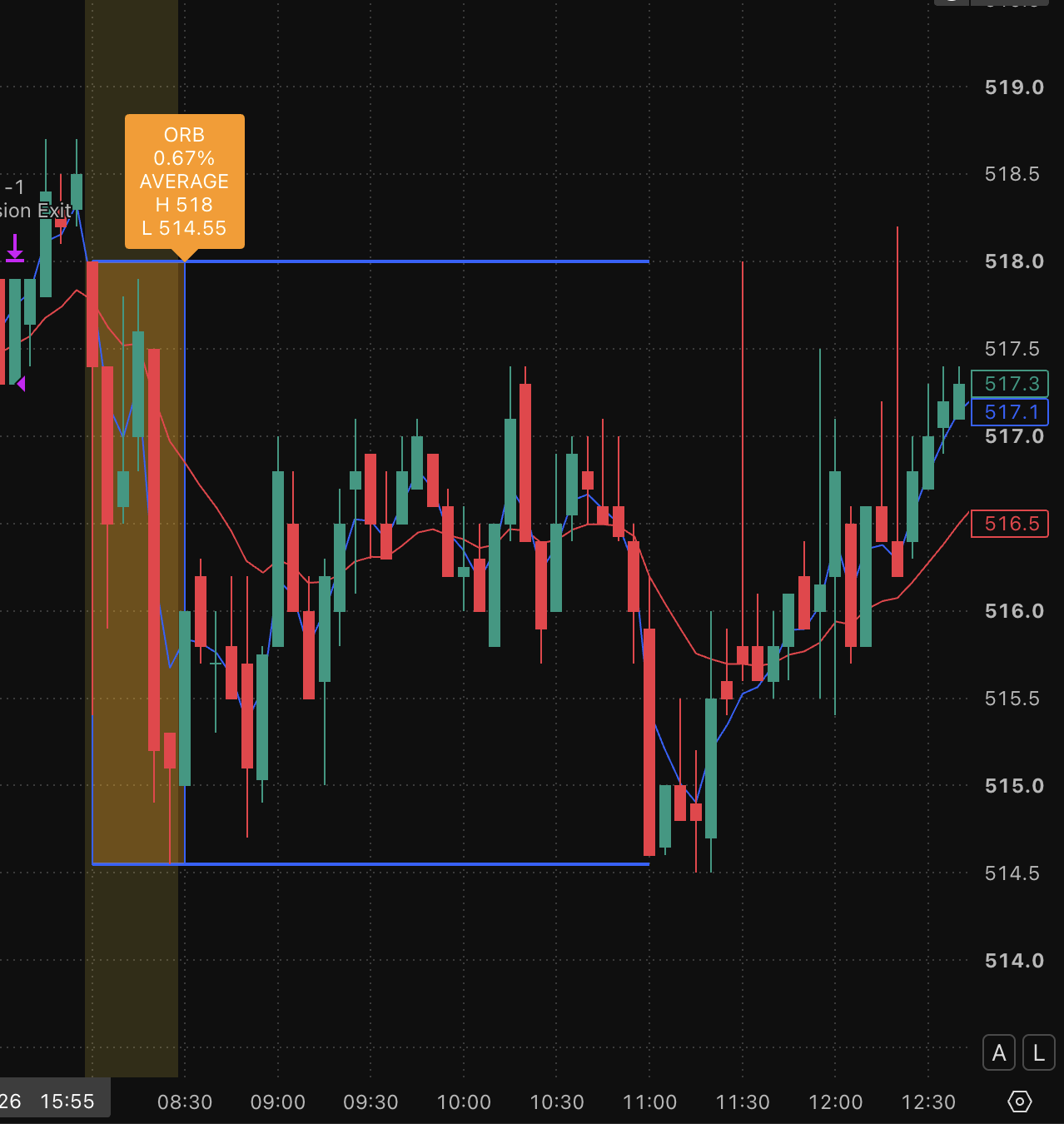
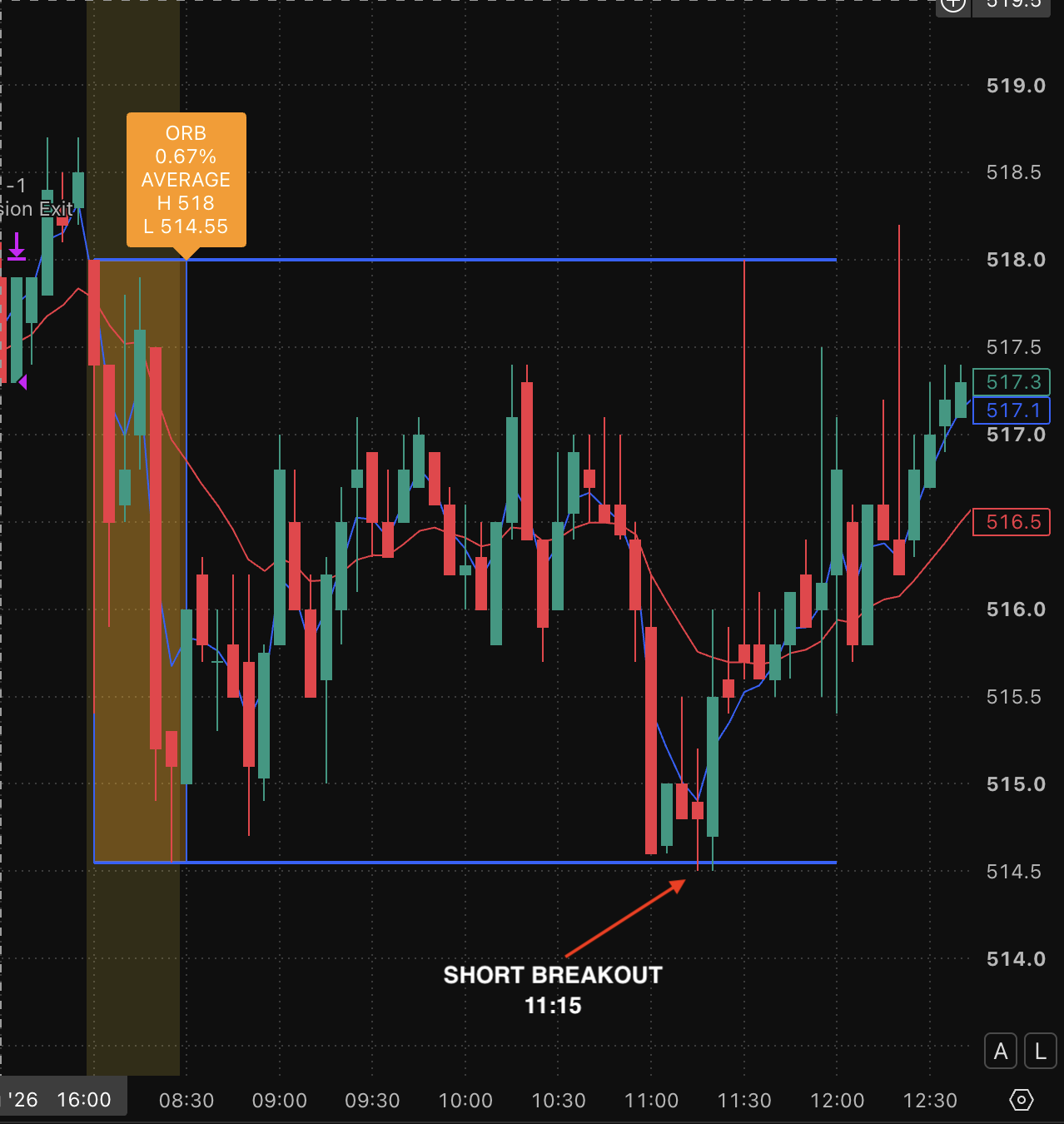
The ORB baseline uses an 11am cutoff for entering the trade. This test extends that cutoff to noon, allowing more late-morning breakouts to enter.
The question is: Will extending the trade-entry time until noon increase the trading edge?
Background
Extending the window could also allow for more ‘fakeouts’ because of the increased time available for spikes that don’t represent the overall price movement.
Settings
Exactly the same as the ORB baseline except with a noon cutoff.
Scope
All tests were run against the LSE stocks and dates detailed here.
Backtest #99 Results
The results below show the baseline results side-by-side with the test here.
| Category | Metric | Baseline (#88) | 12:00 Cutoff (#99) |
|---|---|---|---|
| Trade Activity | Trade plans | 21,869 | 23,242 |
| Trades entered | 21,869 (100.00%) | 23,242 (100.00%) | |
| Not triggered | 0 | 0 | |
| Execution Outcomes | Take profit | 1,813 (8.29%) | 1,853 (7.97%) |
| Stop loss | 6,899 (31.55%) | 7,174 (30.87%) | |
| Timeout | 13,157 (60.16%) | 14,215 (61.16%) | |
| Ambiguous | 0 (0.00%) | 0 (0.00%) | |
| Position Sizes | Total position value | £223,498,978.72 | £236,092,529.96 |
| Largest position value | £46,689.80 | £46,689.80 | |
| Average position value | £10,219.90 | £10,158.01 | |
| Capital turnover | 44699.80x | 47218.51x | |
| Profitability Cross-Check | Wins | 9,652 (44.14%) | 10,264 (44.16%) |
| Losses | 12,208 (55.82%) | 12,967 (55.79%) | |
| Breakevens | 9 (0.04%) | 11 (0.05%) | |
| Profit & Loss | Gross profit | £826,140.99 | £864,166.87 |
| Gross loss | £795,344.13 | £833,843.16 | |
| Profit factor | 1.04 | 1.04 | |
| Total commission | £131,214.00 | £139,452.00 | |
| Average R | 0.0153 | 0.0142 |
Summary
An increased cutoff time had a negative impact on average R.
The hypothesis failed. Average R fell from 0.0153 to 0.0142 — small in absolute terms, but it’s the wrong direction, confirming the late-morning breakouts are on average lower quality than the ones already captured by 11:00.
This test has a property the last two didn’t: it’s a strict superset. Every trade valid under the 11:00 cutoff is still valid under 12:00 — extending the window only adds candidates, it never removes or reshapes existing ones (that’s also why “largest position value” is identical — £46,689.80 — in both runs; it’s the literal same trade). That means I can isolate the ~1,373 trades that only exist because of the extra hour and look at them on their own, not just at the blended total.
Marginal average R: ≈ −0.0033 (range −0.0050 to −0.0017 accounting for rounding in the source figures)
That last line is the headline for the post: the trades captured only by extending the window aren’t just “worse than the rest” — they’re net negative EV on their own, dragging the whole book down from 0.0153 to 0.0142. That’s a much sharper, more defensible claim than “average R went down a bit” — you’re not looking at a diluted blend, you’re looking at a clean incremental slice that loses money by itself.
Net £ result worse again (−£100,417 → −£109,128) — same pattern as the 15-minute test: more trades, more flat commission (£8,238 extra, exactly 1,373 × £6), on top of a negative-EV incremental slice rather than a positive one this time, so both effects point the same way here rather than pulling apart like they did in the range test.
Verdict for the post: this is the cleanest “don’t do this” result of the three tests so far — 0.2% buffer clearly helped, 15-minute range was a wash, and extending the entry window to 12:00 is actively harmful, with a quantifiable culprit (the late-session trades themselves) rather than just an aggregate wobble.